Secondary General Music Lesson Ideas
Birth
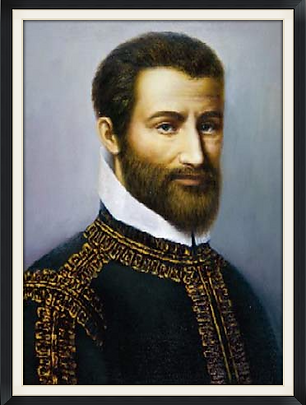
Giovanni Pierluigi da Palestrina was born around 1525 in Palestrina, Italy (near Rome) to Santo and Palme Pierluigi. While we now refer to him as Palestrina, this portion of his name actually refers to the area in which he was born. Palestrina became an alter boy and sang in the local choir as a child. When he was 12 he was sent to Rome to a choir school.
During His Lifetime
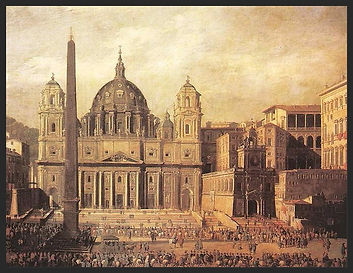
At the age of 20 Palestrina got his first job as a church organist in his home town. Not long after this appointment the bishop of Palestrina became Pope Julius III and moved to Rome. Julius showed his appreciation of local talent by appointing Palestrina director of St. Peter's Basilica's choir. The decade of the 1570s was difficult for him personally: he lost his brother, two of his sons, and his wife in three separate outbreaks of the Bubonic plague (1572, 1575, and 1580, respectively). He seems to have considered becoming a priest at this time, but instead he remarried, this time to a wealthy widow. This finally gave him financial independence (he was not well paid as choirmaster) and he was able to compose prolifically until his death.
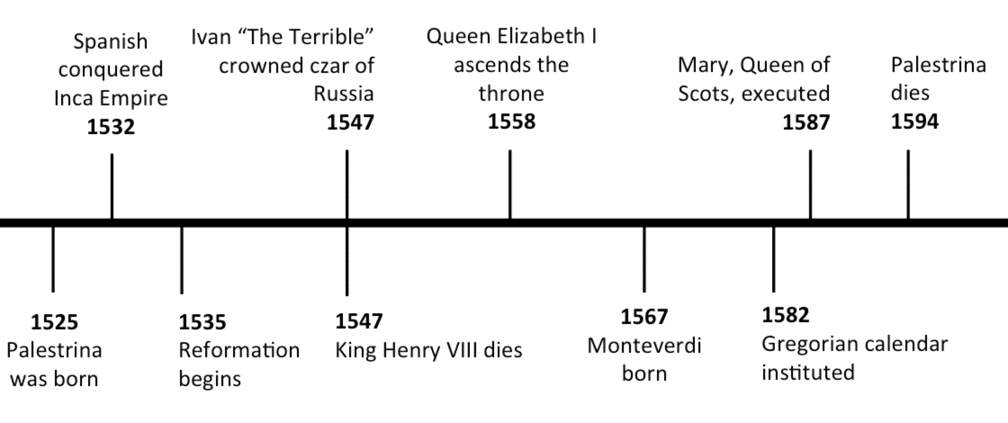
Several things happened during Palestrina's lifetime that you might have heard about before today.
Death
Palestrina died in 1594 at the age of 69 in Rome, Italy. As was the custom of the time, Palestrina was buried on the same day he died, in St. Peter's cemetary. A five-part psalm for three choirs was sung at the funeral. Unfortunately, due to the number of renovations that have taken place at Vatican City, his grave has been 'misplaced'.
~~~~~~~~~~~~~~~~~~~~~~~~~~~~~~~~~~~~~~~~~~~~~~~~~~~~~~~~~~~~~~~~~~~~~~~~~~
Type of Music
Palestrina was a composer during the Renaissance Period. He was employed as a choirmaster at St. Peter's Basilica and other churches/chapels for most of his adult life, which meant he was responsible for composing music for all the religious services and ceremonies. Palestrina was a prolific composer during his lifetime - he wrote 104 masses, 68 offertories, more than 300 motets, at least 72 hymns, 35 magnificats, 11 litanies, and at least 140 madrigals. Below is a video that describes Palestrina's life and music in more detail.
Most Famous Music
Palestrina's most famous piece of music is his Missa Papae Marcelli, a mass dedicated to Pope Marcellus II. While Pope Marcellus II died after three weeks, Palestrina's music lives on.
~~~~~~~~~~~~~~~~~~~~~~~~~~~~~~~~~~~~~~~~~~~~~~~~~~~~~~~~~~~~~~~~~~~~~~~~~~
Listening
The video below is a great example of Palestrina's most famous music, the Missa Papae Marcelli.
Renaissance Period
~ Palestrina