Secondary General Music Lesson Ideas
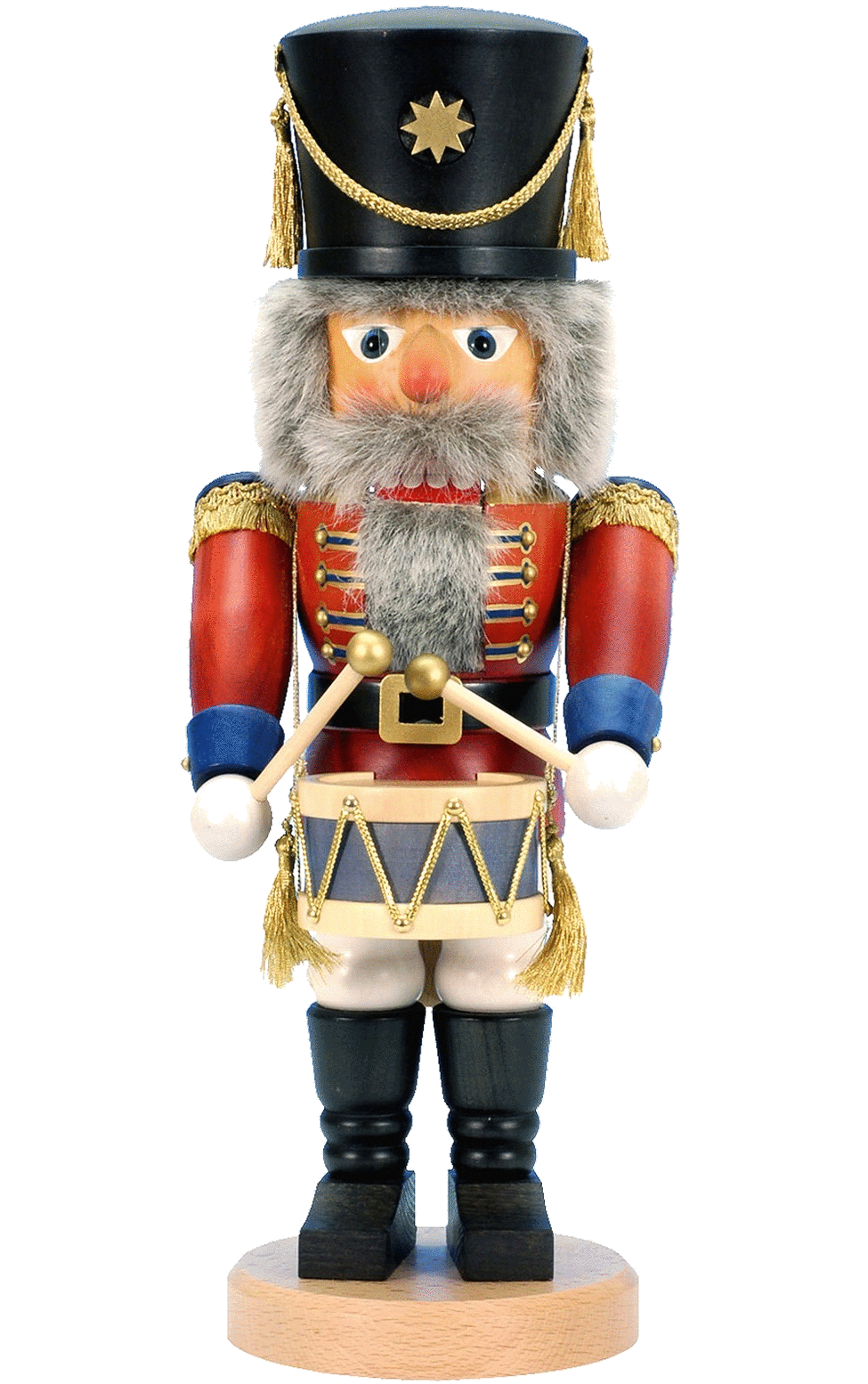
The Nutcracker
~ Ballet


Synopsis
It’s a cozy Christmas Eve at the Stahlbaum’s house. Their house is decorated with Christmas ornaments, wreaths, stockings, mistletoe and in the center of it all, a majestic Christmas tree. As the Stahlbaum’s prepare for their annual Christmas party, their children, Fritz and Clara, wait anxiously for their family and friends to arrive.
When the guests finally appear, the party picks up with dancing and celebration. A mysterious guest arrives dressed in dark clothing, nearly frightening Fritz, but not Clara. Clara knows he is Godfather Drosselmeyer, the toymaker. His surprise arrival is warmly accepted and all the children dance and carry on with laughter. The celebration is interrupted again when Drosselmeyer reveals to the children that he has brought them gifts. The girls receive beautiful china dolls and the boys receive bugles. Fritz is given a beautiful drum, but Clara is given the best gift of all, the Nutcracker. Fritz grows jealous, snatches the Nutcracker from Clara and plays a game of toss with the other boys. It isn't long until the Nutcracker breaks. Clara is upset, but Drosselmeyer fixes it with a handkerchief. Drosselmeyer’s nephew offers Clara a small make-shift bed under the Christmas tree for her injured Nutcracker.
At the stroke of midnight Clara wakes up to a frightening scene. The house, the tree, and the toys seem to be getting larger. Is she shrinking? Out of nowhere large mice dressed in army uniforms, lead by the Mouse King, begin to circle the room while the toys and Christmas tree come to life. Clara’s Nutcracker groups the soldier toys into battle formation and fights the mouse army. The Mouse King traps the Nutcracker in the corner, but the Nutcracker can’t overcome the Mouse King’s strength. Clara makes a desperate move to save her Nutcracker from defeat and throws her slipper at the Mouse King. She hits him directly in the head! The Nutcracker is able to
overcome the stunned Mouse King and claims victory. The mice army quickly carries away their King.
Clara falls onto the Nutcracker’s bed, over-whelmed by the moment. As angels and delightful music hover over their heads, the bed turns into a magical sleigh, floating higher and higher. The Nutcracker is transformed into a human prince (who looks strikingly similar to Drosselmeyer’s nephew). He gets on Clara’s sleigh and drives through a snowy forest where the snowflakes turn into dancing maidens.
After their magical journey through the snow forest, they come to their destination in the Land of Sweets. Clara can’t believe her eyes; ladyfinger mountains topped with whipped cream whiter than snow, sweetly glazed flowers and butter-
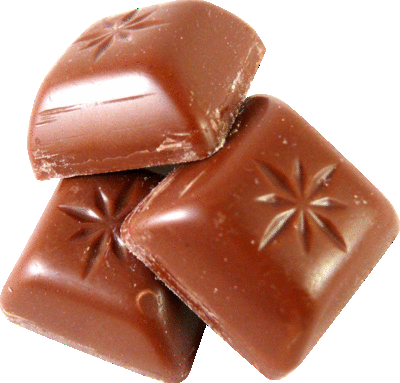
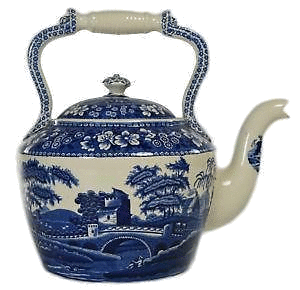
cream frosting everywhere she looks. Upon their arrival, they are greeted by the Sugar Plum Fairy. As they reenact the night’s events, the Sugar Plum Fairy becomes impressed with Clara’s bravery and the Nutcracker’s heroism. In Clara's honor, the Sugar Plum Fairy arranges for the inhabitants of her kingdom to entertain them while they eat: chocolate, a Spanish Dance; coffee, an Arabian Dance; and tea, a Chinese Dance. Clara is also entertained by the dance of the Mirlitons, a dance with Madame Bonbonaire and her clowns, a Russian dance, and the Waltz of the Flowers. Then, the Sugar Plum Fairy and the Nutcracker Prince dance a grand pas de deux. As the celebration draws to a close, Clara drifts off to sleep. She awakens in bed, as the Nutcracker Prince salutes his princess Clara.
A Little Background...
Although the Nutcracker is arguably the most popular ballet of all time - and a Christmas tradition the world over - it was not always the smash hit that it is today. Tchaikovsky, a composer from the Romantic period, wrote the music for The Nutcracker. The ballet premiered in 1892 in St. Petersburg, Russia… and was deemed a complete failure. According to accounts, critics considered the choreography to be confusing, called the dancers “pudgy”, and the story to be lacking in action. While these are pretty harsh words, even Tchaikovsky himself didn’t seem too think much of it, saying in a letter to a friend, “in spite of all the sumptuousness it did turn out to be rather boring”.
After the initial failure of the premiere, The Nutcracker did not see much action. In fact, it took over 60 years - and completely new choreography - before the ballet would become a staple of the repertoire in ballet companies around the world, and one of the universal traditions of the holiday season.
Activity 1
Different nationalities are represented by the dances of the sweets. When the ballet was created, people did not travel the world frequently so foreign products were much, much harder to get. This was the age when great wooden chests of tea swung over the bows of ships from China, when the aroma of coffee evoked dreams of Arabia, and when candies were bestowed on only the most fortunate of Russian children at Christmas time. Thus, the dances performed by the sweets in The Nutcracker represent delicasies that were considered incredibly special, and, for most, could only be found in their dreams.
As we explore the world of these sweets, notice how the dancers' costumes resemble the sweets they bring from their countries, and how Tchaikovsky represented each country within the music. The video below is of the whole ballet, however, the indivudal dances can be found starting at 53:30.
Chocolate - Spanish Dance (53:30) Coffee - Arabian Dance (55:08)
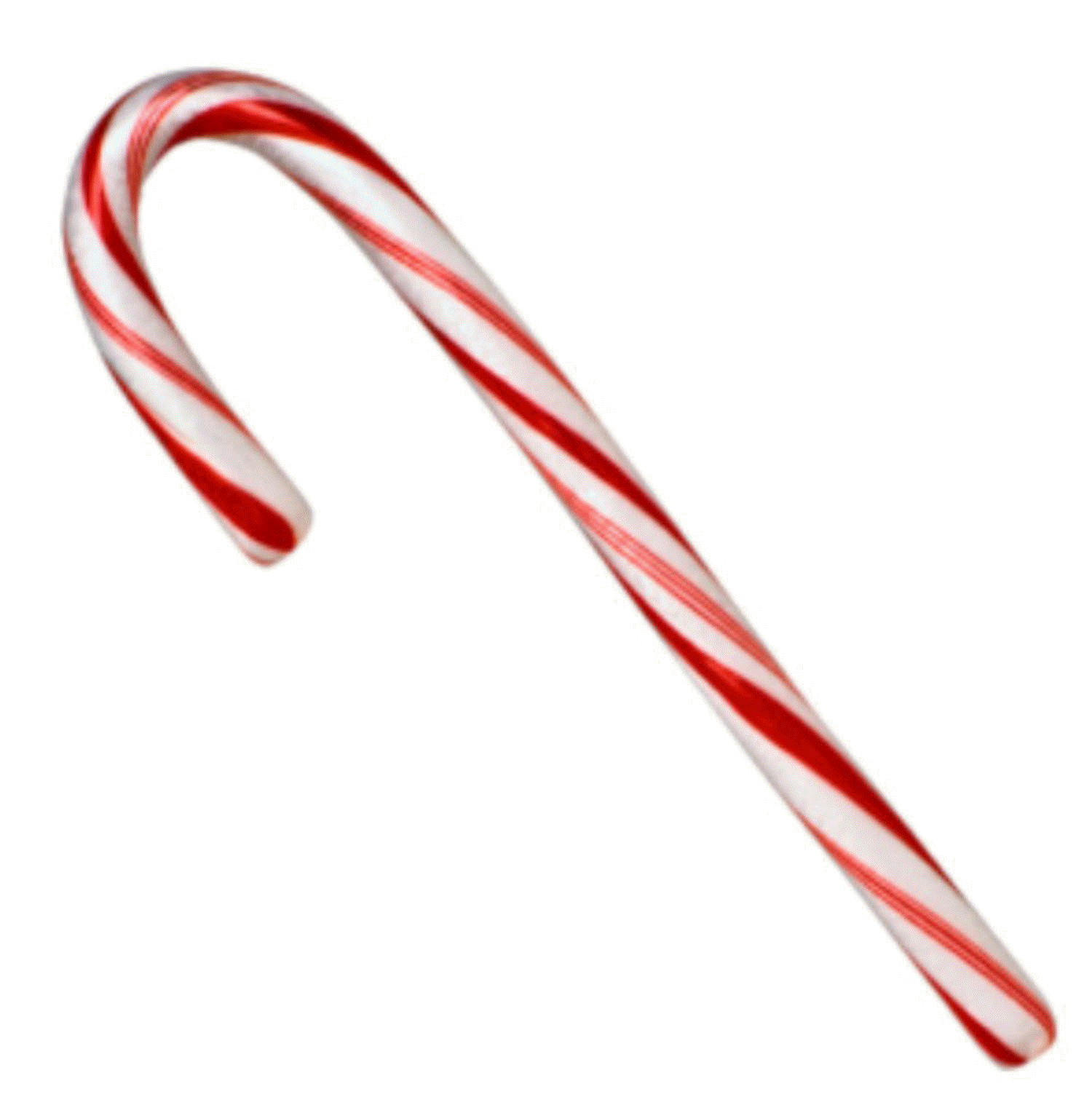
Tea - Chinese Dance (58:43) Candy Canes - Russian Dance (100:10)
(Trepac)
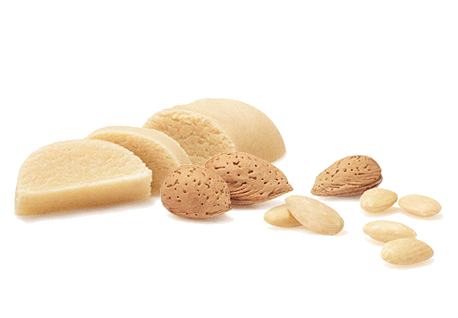
Marzipan - Danish Dance (101:29) Bon-Bons - Mother Ginger (104:08)
(Dance of the Reed Flutes)
There are two other dances during this celebration that are also very well known.
Waltz of the Flowers (107:02) Dance of the Sugar Plum Fairy (121:39)
Activity 2
One of the most intersting instruments in The Nutcracker is the celeste (Cheh-leh-stuh). The celeste was invented in 1886 - about 6 years
before the premiere of the ballet - by a Parisian organ builder. While the celeste looks like a small piano, it has a much softer, and more
subtle timbre. In fact, it is because of this quality that the inventor named the instrument the celeste, which means 'heavenly' or 'celestrial'
in French. To learn more, watch the video and/or listen to the NPR podcast.








Piano
Celesta