top of page
Secondary General Music Lesson Ideas
Lesson(s) Sequence
1. Play O Sacred Head, Now Wounded as students are finding their seats.
2. Ask students to take out their Classroom Notes Worksheet (CNW) binder.
3. We have been talking about Harmony and Polyphonic Texture. Today we are going to continue talking about Harmony; however, this is
Harmony produced through Chords.
4. Introduce the term Chordal Harmony and ask students to write the definition in their CNW.
Definition: Chordal Harmony is pitches occurring simultaneously and moving together with similar rhythm to
create Harmony with the Melody.
Chordal Harmony has a clear vertical relationship among the pitches. Because of this relationship, music using Choral Harmony is
considered to have a Homophonic Texture.
Definition: Homophonic Texture is a melody with only Chordal Harmony (no drums, bass etc.)
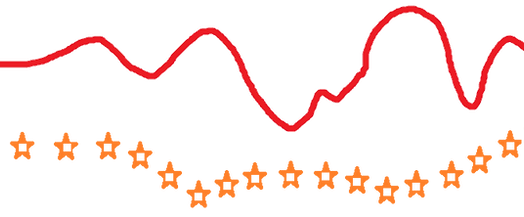
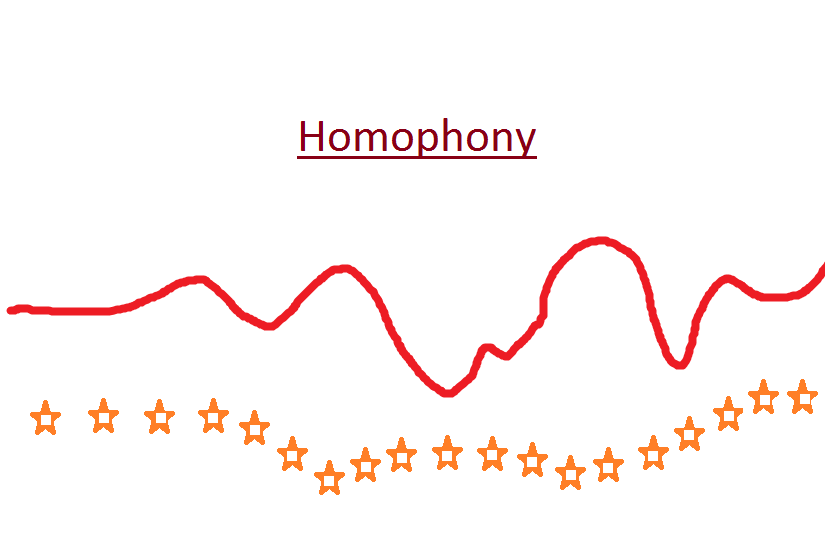
This is what Homophonic Texture looks like when diagrammed (the Melody is the red line, and the stars are the Chordal Harmony)
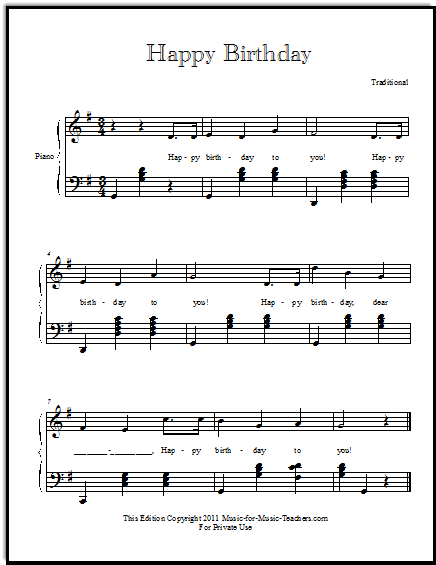
5. So when we played the Chords to Happy Birthday, those Chords produced Chordal Harmony and Homophonic Texture for the Melody.
7. Chordal Harmony with Homophonic Texture can be in one voice/instrument - like when I accompany Happy Birthday on the piano.
Another example of Chordal Harmony all in one voice would be Free Fallin' by Tom Petty.
8. Chordal Harmony can also be split amongst several voices/instruments - like when you accompanied Happy Birthday on the Boomwhackers.
This type of Chordal Harmony can also sound like this.
9. Finally, the chords in Chordal Harmony can sometimes be broken up, which are cleverly called Broken Chords. These are chords in which
the notes are not played simultaneously. We can hear this type of Chordal Harmony in both classical and pop music.
Harmony &
Homophonic Texture
~ Chordal Harmony
O Sacred Head, Now Wounded - Bach
00:0000:00

Free Fallin' excerpt - Tom Petty
00:0000:00

O Sacred Head, Now Wounded excerpt - Bach
00:0000:00
bottom of page