Secondary General Music Lesson Ideas
The Country & People
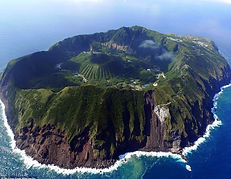
The Philippines is an island country located in Southeast Asia in the western Pacific Ocean. Made up of a group of islands, or island chain, containing 7,100 islands, the Philippines are split into 77 provinces grouped in 16 regions. Many of the islands are small and uninhabited. The entire country is surrounded by beautiful lagoons and tropical beaches.
The interior of the main islands are hilly and mountainous. There are the Chocolate Hills, which are a geological formation of coral deposits and rain water that have a 'chocolate' colored hue. There are also 25 active volcanoes within the Philippines.
Some of the mountains have terraced rice fields that are 2000 years old and were carved by ancestors of the indigenous people of today.
Roughly 10% of the population practice indigenous traditions and live on small farms or in villages. While not considered indigenous, there are people who live a very sparse existence. Among this group are the farmers and laborers that tend to the agriculture. These people still use basic techniques to tend to the land. There are also people who make their living off of the ocean, such as fishermen. Most use small boats and take just enough to live. Other Filipinos live in metropolitan areas, like Manila, which has a population of about 12 million people or 13% of the total population of the Philippines.
Interesting Fact: The official languages of the Philippines are English and Filipino. However, there are 175 individual languages listed for the Philippines. Of these 175 languages, four have no known speakers.
~~~~~~~~~~~~~~~~~~~~~~~~~~~~~~~~~~~~~~~~~~~~~~~~~~~~~~~~~~~~~~~~~~~~~~~~~~
The Music
Although geographically the Philippines belongs to the East, its music has been heavily influenced by the West owing to 333 years of Spanish rule and 45 years of American occupation. Thus, there are three main streams of Philippine music-- indigenous, Spanish influenced, American/European influenced.
Indigenous
The music in the highland and lowland hamlets, where indigenous culture continues to thrive, has strong Asian elements.
Kulintang is a modern term for an ancient instrumental form of music composed on a row of small, horizontally-laid gongs that function melodically, accompanied by larger, suspended gongs and drums. As part of the larger gong-chime culture of Southeast Asia, kulintang music ensembles have been playing for many centuries in the Southern Philippines.
The Kudlong is a Philippine two-stringed, fretted boat-lute. It is four to six feet long with frets made of hardened beeswax. The instrument is carved out of solid soft wood such as that from the jackfruit tree. A constant drone is played with one string while the other, an octave above the drone, plays the melody.
Spanish Influences
The rondalla is an ensemble of stringed instruments played with a pick, which originated in Medieval Spain. During the Spanish period in the East Indies, the rondalla was brought to the Philippines by the Spaniards and certain styles were adopted by the natives. At present, rondalla, in the Philippines, refers to any group of stringed instruments that are played using the plectrum or pick.
American/European Influences
The American regime lasted from 1898 to 1946 during which time Philippine music underwent another process of transformation. Music conservatories and colleges were established at the tertiary level. Graduates from these institutions included the first generation of Filipino composers whose works were written in western classical idioms and forms.
Side by side with this classical art music tradition is a lighter type of music. This semi-classical repertoire includes stylized folk songs, theater music, and instrumental music. The sarswela tradition produced a large body of music consisting of songs patterned after opera arias of the day, as well as short instrumental overtures and interludes.
American lifestyle and pop culture gave rise to music created by Filipinos using western pop forms. Referred to as Pinoy pop it includes a wide range of forms: folk songs, dance tunes, ballads, Broadway type songs, rock' n' roll, disco, jazz, and rap.
~~~~~~~~~~~~~~~~~~~~~~~~~~~~~~~~~~~~~~~~~~~~~~~~~~~~~~~~~~~~~~~~~~~~~~~~~~
The Dance - Extension Activity
Background
The Philippines has a variety of cultural dances – each with it’s own style of music. Today we will be learning one of the cultural dances called Tinikling. Tinikling is a dance along the sides and between two bamboo poles. The poles are roughly nine feet long, are placed horizontally on the ground and are struck together in time to the music. Skill is demonstrated by dancing between the poles and in keeping the feet from being caught by the poles.
Tinikling originated in the Visayan Islands, on the Island of Leyte. There are a couple of 'legends' of how the dance started. The first origin story says the dance began in the 1500s when the natives lost control of their land and became caretakers of the land for the King of Spain. The people who worked too slowly would be punished. Their punishment was to stand between two bamboo poles cut from the grove. Sometimes, the sticks would have thorns jutting out from their segments. The poles were then clapped together to beat the
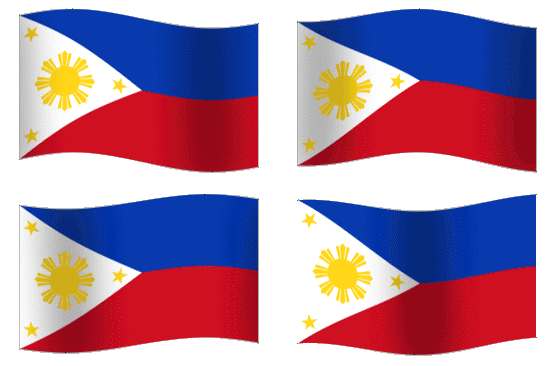
The Philippines




native's feet. By jumping when the bamboo sticks were apart, the natives tried to escape this cruel form of punishment.
The second Tinikling origin story claims the dance began because Filipinos wanted to imitate the tinikling birds’ (i.e., birds with long legs) legendary grace and speed as they walked between grass stems, ran over tree branches, or dodged bamboo traps set by rice farmers.
Regardless of how it originated, Tinikling soon became an art and a dance. It is performed on certain Sundays in the Philippines and often referred to as the national dance of the Philippines (it's not).
Poles
Rhythm of the poles: 3 beats – in-out-out with the poles always maintaining contact with the boards. Ideally, those students who are moving the poles will need to sit on their knees on the floor as illustrated in the pictures. The rhythm created by moving the poles is begun with the poles together in the center of the boards. The poles are hit together for count 1. The poles are then separated and tapped wide on the boards 2x. These are counts 2 and 3. This 3 count movement continues throughout the dance. It can be cued by saying: “in-out-out.” Allow the students who are manipulating the poles to practice without the dancers. Remember to cue and keep the rhythm of the poles steady and consistent.
Note: It is important for the students who are creating the rhythm with the poles to be told to slide the poles along the boards when they are separating or closing them. Lifting the poles could catch the ankles of the dancers and trip them. Also caution students about holding the poles; remind them that fingers need to be on the outside of the poles. Failure to hold the poles properly could result in slammed fingers when the poles are brought back together.
Dance Steps
Basic Step: ¾ Meter – Cue with the words: Out-in-in, out-in-in
– Begin with R shoulder to the poles
– Optional: R arm above head like ballet fifth position and L hand on hip
– Step on L foot (count 1) outside the poles
– Leap/Step with R foot then L foot to center of poles (counts 2-3)
– Leap/Step to opposite side of poles with R foot (count 1)
– Leap/Step to inside of poles with L,R (counts 2-3)
– Leap/Step outside with L foot (count 1–continue repeating step as described above)
Hop Swing Step: ¾ Meter – Cue with the words: Out-in-hop, out-in-hop
– Begin with R shoulder to the poles
– Optional: R arm above head like ballet fifth position and L hand on hip
– Step on L foot (count 1)
– Leap/Step with R foot to inside of poles (count 2)
– Hop with R foot in center of poles (count 3)
– Swing L foot to opposite side of poles and lift R foot from center (count 1)
– Leap/Step with R foot to inside of poles (count 2)
– Hope with R foot in center of poles (count 3)
– Swing L foot to outside in the original position (count 1– continue repeating step)
Hop Turn Step: ¾ Meter – Cue with the words: Out-in-turn, out-in-turn
– Begin with R shoulder to the poles
– Optional: R arm above head like ballet fifth position and L hand on hip
– Step on L foot (count 1)
– Leap/Step with R foot to center of poles (count 2)
– Hop with R foot in center of poles and turn 180 degrees so facing the opposite way (count 3)
– Step L foot on outside of poles (count 1)
– Leap/Step to inside of poles with R foot (count 2)
– Hope with R foot in center of poles and turn 180 degrees so facing the original way (count 3)
– Step L foot to outside in the original position (count 1– continue repeating step)
Hint: I always teach the steps while students are sitting down in their chairs so they understand the cue words and movement. Then, I ask students to practice with the poles stationary on the ground. Finally, I ask students to practice with the poles (and add the music). The below music is a traditional piece used during tinikling. Of the three streams of music we talked about, what is the example we are listening to?
As an ending to the lesson(s), I show this video of master Filipino musicans and dancers.