Secondary General Music Lesson Ideas

Obviously music within the Modern Period is easy to describe (no rules), but it is not always as easy to listen to like Prelude to the Afternoon of a Faun. There are several reasons for this. First, not all classical music composed during this period has a melody. I know you are probably thinking... 'what?' Remember, however, that composers during this time were purposely trying to break rules - and what better rule to break than the one that dictates 'music must have a melody'. Take a listen to what this sounds like...
And then there is the rule where classical music must be played on actual musical instruments. Several Modern Period composers have broken this rule by composing music for things that are not your 'typical' traditional instrument. An example of this is a piece of music written by Leroy Anderson called The Typewriter (a typewriter was what people used to type on before computers were around).
I am sure by now that you are wondering what other major rule could Modern Period composers possibly break. Well, how about the one where music should at least make some sort of sound. Yep, that's right... there is actually a piece of Modern classical music that makes no sound at all - at least not on a musical instrument. Composed by John Cage, this piece of music is call 4'33 or Four Minutes and Thirty-Three Seconds, and is for any combination of instruments. The title of the piece refers to the total length in minutes and seconds of a given performance. While it is commonly perceived as four minutes and thirty-three seconds of silence, the true 'music' of the piece is the sounds of the enviroment that the listener hears while it is performed. Take a listen...
While many people say the first piece of modern music was Prelude to the Afternoon of a Faun composed by Claude Debussy in 1894, modern music did not really get going until about 1910. This is because two composers, Igor Stravinsky and Arnold Schoenberg, both wrote a piece of music around this time that was very different from anything before (and, incidentally, caused quite a reaction from their audiences).
Stravinsky composed music for a ballet called The Rite of Spring, which premiered in Paris in 1913. At the time, a Parisian ballet audience typically consisted of two diverse groups: the wealthy and fashionable set, who would be expecting to see a traditional performance with beautiful music, and a 'Bohemian' group, who were a bit more vocal about their likes and dislikes. According to audience member accounts, on the evening of the premier the theatre was packed, and when the first notes were played the audience was not pleased with what they were hearing. Derisive laughter greeted the first bars of the Introduction and it was not long before the audience grew into a terrific uproar. While at first the audience's anger was directed toward the dancers, it was soon diverted towards the orchestra. As one orchestra member stated, "Everything available was tossed in our direction, but we continued to play on". All in all, around forty of the worst offenders were ejected from the performance. The below video contains a scene from the BBC movie entitled Riot at the Rite that reinacts the Rite of Spring's premier.
Schoenberg’s String Quartet No. 2, composed in 1908, is one of those 'more-talked-about-than-performed' pieces of music. It is a work that is mostly atonal (i.e., does not revolve around a single key signature). Tonality in music is like having a plot – you do not know if it is going to be a happy or sad ending but you know, at least, it is going to have some sense of resolution. This quartet also includes a singer, which, of course, is unusual and unexpected. As you can imagine, the audience was less than pleased when this piece was premiered. As Schoenberg later wrote:
Music of the Modern Period does not contain many melodies that are 'recognizable' because, well... it does not often have melodies. However, we hear 'modern' music all the time in movies where there is a 'bad guy'. Take a listen the next time you watch a movie with a baddie (any scene with Voldermort for example) and you will hear that the music does not really have a melody or a clear tonality. Hmmm... very 'modern'.
Many famous people were alive during the Modern Period. Check out the time machine to put the music of the Modern Period into perspective with other historic happenings of the time (click the icon below to access the keynote presentation).
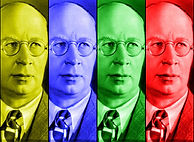
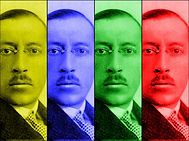
Below is a brief overview of the Modern Period by Classic FM, as well as mini history lessons for the composers Debussy, Prokofiev, and Stravinsky. To access the lesson, click on the specific composer's portrait.

A Little History
The Modern Period refers to the time from 1910 to present, and follows the Romantic Period. Classical music within the Modern Period has one rule... There are no rules!
Composers during this time period wanted to write music that was different; so, whatever you think classical music should sound like, there is probably some Modern classical music that does not sound at all like what you are imagining.
Most scholars agree that Claude Debussy started the Modern Period with his composition entitled Prelude to the Afternoon of a Faun. This piece of music is a Symphonic Poem - although it does not depict a very literal story. It also used a whole tone scale, which is a scale made up of all whole steps. Overall, the music sounds very free flowing and 'impressionistic'. Take a listen...
While Prelude to the Afternoon of a Faun was written in 1894, as you could hear, it did not follow the 'rules' the other Romantic Period composers were adhering to at that time.
My second string quartet caused, at its first performance in Vienna, December 1908, riots which surpassed every previous and subsequent happening of this kind. Although there were also some personal enemies of mine, who used the occasion to annoy me - a fact which can today be proved true - I have to admit, that these riots were justified without the hatred of my enemies, because they were a natural reaction of a conservatively educated audience to a new kind of music. Astonishingly, the first movement passed without any reaction, either for or against. But, after the first measures of the second movement, the greater part of the audience started to laugh and did not cease to disturb the performance during the third and the fourth movement. It was very embarrassing for the Rosé Quartet and the singer, the great Mme. Marie Gutheil-Schoder. But at the end of this fourth movement a remarkable thing happened. After the singer ceases, there comes a long coda played by the string quartet alone. While, as before mentioned, the audience failed to respect even a singing lady, this coda was accepted without any audible disturbance. Perhaps even my enemies and adversaries might have felt something here.